Futurpreneur achieves Rainbow Registered accreditation, reinforcing our commitment to inclusion
At Futurpreneur, creating an environment where entrepreneurs can show up as their authentic selves has always been part of who we are. Today, we are proud to share an important milestone in that journey: Futurpreneur is now Rainbow Registered.
Administered by the Canadian Queer Chamber of Commerce (CQCC), the Rainbow Registered accreditation recognizes organizations that meet rigorous standards for 2SLGBTQIA+ inclusion and have demonstrated a genuine commitment to creating safer, more welcoming and equitable spaces for employees, clients, partners and communities. For Futurpreneur, this achievement is the result of years of dedicated work, learning, collaboration and continuous improvement across the organization.
A rigorous process driven by action, not just intention
Rainbow Registered is Canada’s national accreditation program for businesses and organizations that meet established standards for 2SLGBTQIA+ inclusion. Rather than completing a one-time exercise or a simple checklist, the process involves investing time and resources to conduct a comprehensive assessment of policies, practices, employee experience, training, governance and organizational culture. To be accredited, organizations must demonstrate meaningful progress, not only in identifying gaps but also implementing improvements and building accountability measures that support lasting change.
“This formal registration not only tells the people of Canada that we want to be welcoming to the community, but it also it clearly shows that we have done what it takes to truly be welcoming!”- David Eisnor, Regional Director, Business Development – Atlantic.
For Futurpreneur, earning Rainbow Registered status reflects a sustained commitment to embedding diversity, inclusion and belonging into the way we work and serve entrepreneurs across Canada who are members of the 2SLGBTQIA+ communities.
“Becoming Rainbow Registered with the Canadian Queer Chamber of Commerce reflects our commitment to building an organization where every entrepreneur feels seen, valued and supported. It strengthens our responsibility to foster an inclusive environment that creates clear pathways to success for all, regardless of identity or background. Representation matters, and by ensuring our team is equipped with the knowledge, resources and understanding to support Queer entrepreneurs in all their intersectionality, we are not only addressing barriers, but championing opportunity. This is not a moment, but an ongoing commitment, one we have entered with intention, and one we will carry forward into the future.” – Holly Atjecoutay, Futurpreneur’s Head of Inclusive Impact and Director, Indigenous and Northern Entrepreneurs
“Rainbow Registered bridges the gap between valuing inclusion and putting it into practice,” says Victoria Wicks, Program Lead, Rainbow Registered. “We serve as a trusted partner for businesses, entrepreneurs and organizations working to advance equity across Canada. More than a badge of support, the accreditation provides a rigorous framework for accountability, helping organizations align their policies and experiences with national standards and drive meaningful, measurable change in the communities they serve.”
A journey years in the making
The path to accreditation was driven by passionate Futurpreneur team members who championed this work over several years. From reviewing policies and procedures to strengthening employee education, advancing inclusive practices and gathering organizational evidence, the process required collaboration and dedication from teams across the organization.
“A certificate on a wall doesn’t prove anything. The proof is in the fact that Futurpreneur spent more than three years willingly opening itself to external scrutiny, addressing areas for improvement and building the evidence needed to back up its commitment to inclusion. The accreditation challenged us to look beyond how we viewed ourselves as an organization and examine whether our policies and practices consistently supported the inclusive culture we wanted to create.“ – Logan Daoust, Business Development Manager, Indigenous Entrepreneurs
Their work helped ensure that inclusion is reflected across Futurpreneur’s communications as well as its daily operations.
Why Rainbow Registered matters
Rainbow Registered is an important reflection of Futurpreneur’s commitment to creating an environment where everyone feels respected, welcomed and supported. For our employees, as well as the entrepreneurs, mentors, partners and community members we work with, the accreditation signals that inclusion is embedded in our culture and backed by meaningful action. It demonstrates our commitment to fostering inclusive spaces where people can bring their authentic selves and fully participate in the entrepreneurial ecosystem.
We recognize that young entrepreneurs from underrepresented groups often face unique barriers on their entrepreneurial journeys. To support their success, we offer a range of programs delivered by team members with lived experience, including those who identify as Queer. Currently, 10% of our team identifies as 2SLGBTQIA+, including 12% of our Leadership Team and 8% of our Senior Leadership Team.
Through initiatives such as the Black Entrepreneur Startup Program and the Indigenous Entrepreneur Startup Program, as well as our ongoing support for women entrepreneurs and newcomers to Canada, we continue to work toward a more inclusive and accessible entrepreneurial landscape, and we’re making progress.
Between April 2025 and March 2026, 41% of the businesses supported by Futurpreneur were women-led, 11% had 2SLGBTQIA+ founders, 15% had Black founders and 3% had Indigenous founders. Through programs such as My Canadian Startup and other tailored supports, Futurpreneur also helps newcomer entrepreneurs access the financing, mentorship, resources and networks they need to launch and grow successful businesses across Canada.
This Rainbow Registered accreditation reinforces our commitment to ensuring that all entrepreneurs, regardless of their identity or background, feel welcome and supported when engaging with our team.
Looking ahead
As Futurpreneur celebrates 30 years of empowering young entrepreneurs, Rainbow Registered marks an important milestone in our ongoing journey to create a more inclusive entrepreneurial ecosystem.
While we are proud of this achievement, we know the work does not stop here. We remain committed to listening, learning and evolving so that entrepreneurs, employees, mentors and partners can thrive and succeed.
By continuing to champion inclusion and expand opportunities for underrepresented communities, we can help build a stronger, more innovative and more prosperous Canada for everyone. Read more about our commitment to diversity and inclusion here.
Building from within: Futurpreneur’s commitment to Indigenous economic resilience
As part of our ongoing series celebrating National Indigenous Peoples Month, this post includes highlights from a conversation about Indigenous economic resilience between our CEO, Karen Greve Young, and Holly Atjecoutay, head of inclusive impact and director of Indigenous and Northern Entrepreneurs at Futurpreneur.
Across Indigenous communities, entrepreneurship has always been rooted in innovation, resilience and mutual support. While economic landscapes have changed over time, this core spirit of resilience and business ownership continues to drive growth and success for Indigenous entrepreneurs today.
This June, as Canada celebrates National Indigenous Peoples Month, Futurpreneur is focusing on a vital narrative: amplifying the journeys of thriving, young Indigenous entrepreneurs who are reshaping Canada’s entrepreneurial landscape by reclaiming economic independence and championing authentic representation over tokenism.
Resilience through success
True resilience is about acknowledging enduring hardships while celebrating the triumphs of the present. When discussing Indigenous communities, most mainstream media often focus on historical hardships. But at Futurpreneur, the spotlight is intentionally on the here and now, countering outdated stereotypes by celebrating the successes of Indigenous founders and their thriving businesses.
Focusing on success and celebration honours the strength and determination of Indigenous communities while giving the next generation the confidence to step into business ownership. “We need to focus on the people,” notes Holly Atjecoutay, Head of Inclusive Impact and Director of Indigenous and Northern Entrepreneurs at Futurpreneur. “We’ve come astronomically far. Highlighting these successes gives young people the realization that their business dreams are completely within reach.”
Cultivating culturally rooted programming
Led by a team with lived experience, Futurpreneur’s Indigenous Entrepreneur Startup Program (IESP) supports young Indigenous entrepreneurs with a range of resources and programming grounded in Indigenous values and community realities, enabling these young founders to build businesses on their own terms.
This commitment comes to life through specialized programs, partnerships and community-led initiatives. For example, Futurpreneur’s Ohpikiwin program1 offers vital financial advice tailored for Indigenous innovators. Similarly, the Indigenous Founders Circle, launched in November 2025, creates a space for founders to connect, share experiences and support one another.
This approach works because the IESP team understands that every entrepreneurial journey looks different. Instead of following a rigid timeline, the team meets founders where they are and supports them at their own pace. Some entrepreneurs might attend several workshops before taking the next step, while others benefit from one-on-one conversations and relationship-building. Throughout the process, the focus remains on creating a welcoming and accessible environment where founders feel supported.
The blueprint of collaboration: Building trust
Sustainable economic opportunities are built on trust, relationships and mutual respect. In many First Nations, Inuit and Métis communities, trust in corporate and government institutions has been shaped by a long history of exclusion. The IESP team recognizes that reality and instead of focusing on quick wins, invests time in visiting communities, listening, fostering relationships and laying a strong foundation for future generations.
“When we first visit Indigenous communities to offer free workshops and resources, people naturally want to get to know us and understand our intentions,” Holly explains. “They ask, ‘What is your goal here?’ It takes time and real commitment to show that we are genuinely there simply to support their growth. Cultivating that relationship takes dedication, but it allows us to build strong, lifelong partnerships.” Through partnerships with organizations like the Business Development Bank of Canada (BDC), Futurpreneur helps facilitate co-lending opportunities that give young founders access to critical startup capital. These partnerships also help entrepreneurs build long-term relationships, making it easier for them to access additional financing as their businesses grow.
Representation vs. Tokenism
A key strength of Futurpreneur is its commitment to meaningful representation: Indigenous and non-Indigenous leaders work together as equal partners to guide the organization. This goes beyond tokenism by creating leadership opportunities where diverse voices have real influence, decision-making power and the ability to shape organizational strategy.
“Before Holly joined our Leadership Team, we had well-intentioned, non-Indigenous leaders making decisions about what Indigenous founders needed, and that simply does not work,” Karen Greve Young, Futurpreneur CEO, says. “We value lived experience alongside professional expertise. Having representation at the leadership level and on our Board removes assumptions, allows for honest, transformative learning and ensures we co-create programs that truly align with what entrepreneurs need.”
Futurpreneur also ensures Indigenous leadership is reflected across the broader organization by recognizing leaders for their full professional expertise. When Holly joined Futurpreneur’s Senior Leadership Team in 2024, her responsibilities expanded beyond the IESP to encompass inclusive impact across the organization.
“I bring my perspective as a Cree and Saulteaux woman to the table, but I also bring years of professional expertise across multiple industries,” Holly says. “When an organization values your whole background, you become a voice for all, breaking down boundaries and showing young people that their leadership potential has no limits.”
Looking forward: An unshakable community
The future of the IESP is bright, driven by momentum that extends far beyond the formal program itself. Economic resilience grows stronger when entrepreneurs connect, collaborate and support one another. That momentum is already taking shape within the Indigenous Founders Circle. After the formal sessions ended, the participating entrepreneurs chose to continue meeting regularly on their own to share advice, exchange experiences and support one another across cities and provinces. This peer-led initiative reflects the lasting impact of the program: creating a self-sustaining community built on connection, collaboration and mutual support.
As Futurpreneur looks beyond this celebratory month, the focus remains on valuing Indigenous representation, fostering community-led prosperity across the Canadian economy and growing the reach of the IESP by staying closely connected to the evolving needs of Indigenous communities.
“We want to authentically reach more Indigenous founders by keeping our finger on the pulse, continually talking to communities, listening to their experiences and adapting our resources based on what we learn. Increasing lived experience and representation within the program is how we ensure our support remains meaningful, ” Holly notes.
For Futurpreneur, this ongoing evolution supports a broader, long-term vision.
“When we look ahead, our goal is to foster Indigenous economic prosperity for generations to come,” Karen says. “By giving young, Indigenous entrepreneurs the tools to succeed today, we are helping build a sustainable foundation, ensuring that the economic success of this generation opens even greater doors for the next.”
If you are an aspiring or early-stage Indigenous entrepreneur aged 18 to 39 looking for financing, culturally rooted mentorship and a powerful network of peers who understand your experience, explore the Indigenous Entrepreneur Startup Program (IESP).
Discover how our dedicated team can support you on your journey towards economic resilience and business success.
Redefining Success: Darion Ducharme bridges the digital divide for Indigenous communities
This article is part of our 30th anniversary series, celebrating the young Futurpreneur-supported entrepreneurs shaping Canada’s economic future, as well as the mentors and partners who have supported them since 1996.
For Darion Ducharme, a proud member of Lac Seul First Nation now living in Winnipeg, building a business meant completely rethinking what it means to be successful.
Ten years ago, his dream was to buy a classic, air-cooled Porsche 911. He achieved that goal three years ago and eventually sold the vehicle at a profit. But hitting that major milestone didn’t bring the fulfillment he thought it would. Instead, it prompted him to rethink success and focus on purpose-driven growth.
Today, Darion is translating that mindset into action as the owner and founder of Teqare, a Winnipeg-based corporation that provides vital safety and digital literacy training to Indigenous communities across Canada.
Spotting a gap in the community
Before launching his business in 2021, Darion worked as a manager at Wow Mobile. He enjoyed offering unbiased advice to customers but his daily interactions revealed a troubling trend that hit incredibly close to home. Many Indigenous community members, especially Elders, were struggling to navigate their mobile devices, leaving them vulnerable to digital scams and losing access to essential services.
Darion saw a clear gap. No services focused on delivering technology literacy specifically tailored for Indigenous communities. As a proud member of Lac Seul First Nation, he felt a responsibility to help protect and empower both youth and Elders. “I really believe that every entrepreneur and every person has a calling in their heart,” Darion says. “And that calling is for a greater purpose to do something that’s incredible and it’s incredible for you.” For Darion, that meant answering his own call to community service. “If I was worth $300 million, I would still do what I am doing today,” he adds. “Doing the training for the kids and for the Elders warms my heart.”
Driven by this profound sense of purpose, Darion chose to step away from the corporate world to turn his calling into a reality for First Nations across Canada.
Finding support through Futurpreneur
Trading a steady, guaranteed paycheck to start a business is a significant leap, especially for young entrepreneurs who often face challenges accessing startup financing. But Darion found his turning point when he connected with Futurpreneur. Through Futurpreneur’s Indigenous Entrepreneur Program, he secured a startup loan that helped turn his idea into reality. This funding provided the essential capital to design a logo, incorporate the business, set up bank accounts and launch a professional website. It also gave him enough working capital to survive the first few months before launching Teqare. Without this early trust and financial runway, Darion admits the business likely would have remained just an idea.
Learning to navigate the speed bumps
In the beginning, Teqare operated on a small scale, with Darion visiting people one-on-one in their homes during the height of COVID-19. As the business began to grow, he ran into a major obstacle. A prospective client who had been discussing a $ 90,000 contract suddenly stopped responding. The setback left Darion feeling completely discouraged and uncertain about the company’s future.
Needing guidance, Darion reached out to his Futurpreneur mentor, Noah Wilson. The two met at a local First Nations cafe, where Noah listened carefully as Darion shared his concerns. “I knew he was cooking something up,” Darion remembers. “He had 10 amazing solutions that I could bring in right here, right now. It was amazing because I felt like he really cared and he came in a very serving way.”
Noah’s mentorship taught Darion a vital business skill: how to pivot. By listening to advice, Darion adapted his business offerings and attracted new opportunities. The shift brought almost immediate success, leading to a wave of new bookings.
A model of success by every metric
Five years after launching, Teqare is now a thriving company with a national track record of success. Darion and his team have delivered in-person workshops to over 70 First Nations communities, teaching essential skills in cybersecurity, financial literacy and navigating life in urban centres. Reaching remote communities comes with its set of challenges. In some cases, travel costs exceeded $3,400 per person.
Despite these barriers, Teqare continues to prioritize in-person sessions for youth and Elders, because of the stronger engagement and learning outcomes it can provide. As the company’s impact has grown, so has its visibility. Teqare has been featured on CBC, Global News and The Globe and Mail. That recognition has helped attract corporate sponsors who fund workshops in lower-income communities and schools. The business has also provided financial stability for Darion and his family, enabling him to support his wife and daughter at home while continuing to invest in future growth.
Looking ahead, Darion has a bold goal for the next three years: to expand Teqare into all 630-plus First Nations across Canada.
Face your fears and take the risk
Darion’s advice to aspiring entrepreneurs is simple, urgent and deeply personal. He points out that traditional university degrees no longer guarantee a fulfilling or high-paying career path in Canada. Entrepreneurship, however, unlocks unlimited earning potential and allows people to create a purpose-driven life.
His perspective is shaped by a profound personal loss. After losing his wife to cancer, he gained a deeper appreciation for how quickly life can change and the importance of pursuing opportunities while they are in front of you. Darion learned that when people are on their deathbeds, they do not think about their material goods or the things they failed at. They are haunted by the “what-ifs”. He urges aspiring business owners not to let fear block them from building something incredible. “Losing out on a contract isn’t failure, but giving up is failure,” Darion says. “So as long as you still have breath in your lungs, don’t give up on that dream. Don’t give up on that calling. Take that risk. It is so worth it.”
Ready to start your own journey?
At Futurpreneur, we believe that young entrepreneurs like Darion are helping shape Canada’s economic future. Whether you’re looking to launch a business, buy an existing company or grow your side hustle into a full-time career, we’re here to support you every step of the way.
Learn more about Futurpreneur’s Indigenous Entrepreneur Startup Program or explore our core startup program featuring the financing and mentorship you need to succeed in Canada.
From store closure to storefront: How Michael Tourand reimagined his family business
This article is part of our 30th anniversary series, celebrating the young Futurpreneur-supported entrepreneurs shaping Canada’s economic future, as well as the mentors and partners who have supported them since 1996.
When a family business closes its doors, the story often ends there. For Michael Tourand, it was a starting point.
In August 2024, the workwear store the Tourand family had operated in Saskatchewan since 1982 shut down, leaving a gap in both the market and the community. Faced with the choice to move on or move forward, Michael and his brother chose the harder path: start over. Today, Michael is the owner of Moose Mountain Workwear in Carlyle, Saskatchewan, a new venture rooted in his family’s legacy but designed for today’s workforce.
Carrying forward a legacy on his own terms
Having grown up with the business, Michael understood the industry and the people it serves. But stepping into ownership meant rethinking what the business could be. He set out to modernize his offering, bringing in updated technology, stronger systems and a renewed focus on community.
“It was about taking that 40-year legacy and bringing in new technology, stronger corporate services and a deeper commitment to our community,” he says.
While the vision was clear, securing financing was not. Most traditional lenders viewed the business as a continuation rather than a new venture, making it difficult for Michael to access the support he needed to launch.
Finding the right partner
Michael’s turning point came when he connected with Futurpreneur. Where traditional banks saw a complicated history, Futurpreneur saw potential: an experienced entrepreneur, a clear market need and a strong plan for growth.
Through the Indigenous Entrepreneur Startup Program, Michael secured flexible, equity-free financing to open and stock his store. More importantly, he gained a partner who understood the realities of Indigenous entrepreneurship.
Learning to lead
While Michael brought more than 20 years of industry experience, running a business was a different skill set. Through Futurpreneur, he was paired with mentor Jerome Voss, who helped him navigate the shift from employee to owner.
“I can’t say enough about the mentorship program,” Michael says. “It pushed me to think differently and really understand the financial side of the business.” From payroll to bookkeeping to long-term planning, mentorship gave Michael both the tools and the confidence to lead. It also provided something less tangible but equally valuable: a trusted second opinion.
Having an experienced professional to bounce ideas off allowed him to move forward with confidence, knowing he had a solid grasp of the numbers as well as the customers.
A strong first year by every measure
In a sector where many businesses struggle to make it through their first year, Moose Mountain Workwear turned a profit. But for Michael, success goes beyond the balance sheet.
Community reinvestment – In its first year, the business gave back more than $10,000 in cash and products. As a volunteer firefighter for thirteen years, Michael sees this as an investment in the community and the place where his son will grow up.
Inclusive partnerships – As a Métis-owned business, Moose Mountain Workwear partners with White Bear First Nations, supplying safety gear for construction and housing projects.
Service that stands out – Michael’s approach is simple: show up for customers when they need you most. Whether it’s opening the shop on a Sunday afternoon or hand-delivering orders to corporate clients, his people-first approach has built strong customer loyalty.
Meeting a real need in the community
Beyond retail, Moose Mountain Workwear serves as a safety hub for workers in oil, gas and agriculture; industries where the right equipment matters. The store focuses on specialized gear, including fire-resistant clothing, high-visibility apparel and fall protection, helping workers stay safe on the job. With demand growing, Michael is already looking to expand, particularly in nearby communities like Weyburn and Estevan.
“Fortune favours the brave”
Michael’s advice to aspiring entrepreneurs, especially those in Indigenous communities, is straightforward: “Fortune favours the brave. So, be brave.”
He acknowledges the uncertainty that comes with starting a business but emphasizes the importance of taking the first step: “It’s okay to be nervous and ask for help, but it’s not okay to not try.” Michael believes small businesses that put people first will always have a place, even as industries evolve. His journey from working in a family business to building one of his own is a reminder that our backgrounds and our identities are our greatest strengths. By combining his Métis heritage with a forward-looking approach, he is building a future that is both rooted in community and built for the future.
Ready to start your own journey?
At Futurpreneur, we believe that young entrepreneurs like Michael are the heartbeat of the Canadian economy. Whether you’re looking to start a business from scratch, buy an existing one or grow your side-hustle into a full-time career, we’re here to support you.
Learn more about Futurpreneur’s Indigenous Entrepreneur Startup Program or explore our core startup program with financing and mentorship to start or buy a business in Canada.
Entrepreneurial self-care: Moving beyond the hero-or-zero myth
“Anything that’s human is mentionable, and anything that is mentionable can be more manageable. When we can talk about our feelings, they become less overwhelming, less upsetting, and less scary.” — Fred Rogers
There is a persistent illusion in entrepreneurship that it is you against the world.
Yes, the initiative starts with you, but this mindset quietly installs a dangerous expectation: you must always be sharp, resilient, and in control. You must always be the “Hero” or “Heroine”. Otherwise, you are failing. I call this the “Hero-or-Zero model”, an all or nothing way of seeing yourself that is rigid, unrealistic, and ultimately unsustainable. More importantly, it leaves no room for emotional self-care.
Many entrepreneurs believe they need to always project confidence, hiding doubt, fear, or fatigue. They keep pushing through telling them selves this is what it takes. Yet the irony is that the more they suppress what they are experiencing, the heavier it becomes. What they do not express does not disappear; it accumulates. Self-care is not a luxury for entrepreneurs, it is essential for staying in the game.
Name it
The first step towards self-care is awareness. Recognize what you feel and be willing to name it. When you say, “I feel anxious,” or “I feel like an imposter,” something shifts. You create distance between yourself and the emotion; you are no longer fused with it. You are observing it. Precision matters here because you have to move beyond “good” or “bad”. Try to identify whether you are feeling overwhelmed, apprehensive or disappointed? Naming emotions accurately helps you process them more effectively. Using an emotion wheel can expand your vocabulary if you get stuck.
There is also an important distinction to make: a feeling is not an identity. “I am an imposter” locks you in place. “I feel like an imposter” gives you room to move. The first is fixed, the second is temporary. That small shift creates space and with that space, you gain options. You can ask better questions, by responding instead of reacting, and acknowledging what you are experiencing without judging yourself for it. That is where change starts.
Name it, then work with it
Once you have named what you are feeling, you can get specific by asking the following questions:
- What exactly is overwhelming me?
- What is within my control today?
- What is one small step forward?
These questions move you from being stuck inside the problem to actively working on it. While emotional clarity does not remove pressure or uncertainty, it changes your relationship to them. And that is often enough to create momentum.
One technique I have returned to consistently is the Fear vs. Faith” dialogue, inspired by Gregg Levoy. When using this technique, you write a conversation between two parts of yourself, without stopping, for 15 to 20 minutes. In this conversation, fear might say, “I have no idea what I am doing.” Faith responds, “You are not supposed to have all the answers.” Fear says, “I am winging it.” Faith asks, “So how can you get better at not winging it?” What is surprising here is that beyond fear another voice appears, a steadier, more constructive one. If you stay with it, that voice often becomes stronger. You are not suppressing what you feel; you are engaging with it, turning inward with curiosity instead of avoidance.
Create a safe space
Entrepreneurship can feel isolating, but it does not have to be. One of the most effective forms of self-care is having a space where you can speak honestly with someone who understands the reality of building something within uncertainty. This does not require a large network; one trusted peer is enough.
In a recent workshop I hosted with entrepreneurs from Futurpreneur’s Growth Accelerator, as soon as one person shared openly, others followed. The pressure to appear strong dropped and was replaced by relief. And with that relief came clarity (a shout-out to mental health practitioner and entrepreneur Nalwanga Musisi from Karibu Mental Health, who facilitated the workshop). If you do not have that kind of space yet, journaling and using the Fear vs. Faith technique above, is a powerful place to start.
Self-care is ongoing
Some of the most pressing challenges entrepreneurs listed during the Growth Accelerator workshop were remarkably consistent: financial stress, the constant weight of managing uncertainty and risk, and feeling overwhelmed. These are not temporary problems that get solved and disappear. They are part of the entrepreneurial landscape.
There will always be some level of uncertainty; financial pressure will come and go; overwhelm will return, especially during growth or change. If you expect these challenges to vanish, you will feel like you are constantly falling short. If you accept them as part of the process, you can focus on how you respond. That is where self-care comes in, it should be seen as an ongoing practice, not as an occasional reset. Something you return to regularly to help you stay steady even when conditions are not.
Moving beyond hero or zero
The “Hero-or-Zero” model tells you that you are either performing at your peak or you are failing. Real entrepreneurship does not work that way. Some days you will feel focused, confident, and capable. Other days you will feel uncertain, stretched, or stuck. Both are normal parts of building something that does not come with a clear map.
The goal is not to eliminate difficult moments; it is to meet them differently. It is to notice what is happening internally, to name it, to create space to process it, and to seek support when you need it, not as a Hero trying to carry everything alone, but as a human building something meaningful, one honest step at a time.
Dominik Loncar is an entrepreneurship coach at Futurpreneur. Over the last decade, he has dedicated his practical skills and expertise from building three businesses and running his own social purpose business to guide young entrepreneurs. Dominik believes that becoming an entrepreneur is a transformative identity shift and has worked with over 200 young entrepreneurs to launch social purpose ventures and both traditional and innovation-based businesses in a multitude of industries.
Ready to scale with a supportive community?
If you are a Futurpreneur-supported entrepreneur looking for space to navigate these challenges with peers who get it, explore the Futurpreneur Growth Accelerator. Learn how our programs provide the tools and community you need to move beyond the hero-or-zero myth.
Celebrating 30 years of impact : A recap of Futurpreneur’s Hill Day 2026
What an incredible week in Ottawa! As we celebrate Futurpreneur’s 30th anniversary, our team, mentors, and partners gathered in the nation’s capital for Hill Day 2026.From high-level policy discussions at the Future of Business Summit to meaningful conversations with Members of Parliament, the energy was palpable. We are thrilled to share the highlights of how we are working together to foster a more inclusive and prosperous ecosystem for Canada’s next generation of business leaders.
Driving the conversation: The Future of Business Summit
Our week began at the Future of Business Summit, hosted by our partners at the Canadian Chamber of Commerce. Futurpreneur CEO, Karen Greve Young, joined a panel titled “Enabling Small Businesses to Scale: From Insight to Impact.” During the session, she emphasized that while Canada has no shortage of entrepreneurial ambition, the challenge lies in providing the right conditions for these businesses to scale. Moderated by Déborah Cherenfant, the discussion included Cinzia Bazzo (Sage) and Simon Poulin (Upside Drinks).
Key takeaways included:
- Breaking down internal barriers: For many founders, their first export market is a neighboring province, yet red tape can make this challenging.
- The advisory gap: Scaling requires a different toolkit than starting a business. Founders need access to management talent and experienced advisors who have navigated these waters before.
A highlight of the summit was during the Premiers’ Session featuring The Hon. Doug Ford (Premier of Ontario), The Hon. Susan Holt (Premier of New Brunswick), The Hon. Rob Lantz (Premier of Prince Edward Island), and The Hon. R.J. Simpson (Premier of the Northwest Territories). The discussion focused on national unity and trade, reinforcing the issues entrepreneurs face across the country.
A night of celebrations: Our 30th anniversary Hill Day reception
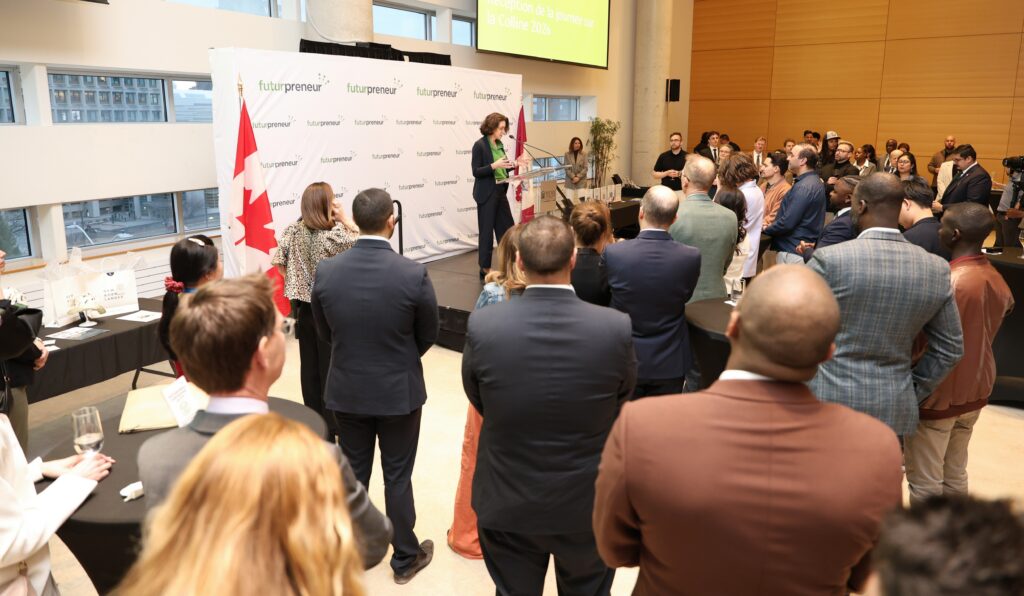
The highlight of the week was Futurpreneur’s 30th anniversary Hill Day reception at the University of Ottawa, co-presented by our long-standing partners, the Business Development Bank of Canada (BDC), represented by Miguel Barrieras, Chief Community Banking and Impact Officer, and the Royal Bank of Canada (RBC), represented by Yasser Ghazi, Vice President- Commercial Financial Services, Ontario North & East. The Honourable Rechie Valdez, Minister of Women and Gender Equality and Secretary of State (Small Business and Tourism), joined us and expressed her support for the next generation of founders. Eleven Futurpreneur-supported young entrepreneurs from across Canada showcased their businesses to policymakers and ecosystem leaders, reflecting the diversity and strength of the country’s entrepreneurial landscape.
Featured entrepreneurs included:
- Joanna Pariseau (Taste the City, AB), who connects people to cities through food-based discovery experiences and turns digital recommendations into purchasable real-world routes.
- Moirae Choquette (Tomato Wheels, AB), founder of one of Canada’s fastest-growing independent wine labels focused on quality and community.
- Darion Ducharme (Teqare, MB), who delivers technology and cybersecurity education to First Nations communities.
- David Owasi (Outreach Genius, MB) David leads a venture-backed startup that deploys AI voice agents to help home service companies and brands scale operations.
- Constanza Safatle (Newbornlander, NL), G20 Alumni, who creates sustainable baby accessories while providing employment and training for newcomer and refugee women.
- Diana Virgovicova (Xatoms, ON), G20 Alumni, who uses AI and quantum chemistry to develop new materials for water treatment.
- Jennifer Ai (Leopard AI, ON), G20 Alumni, who is rethinking how venture capital is allocated globally.
- Richa Gupta (Good Food for Good, ON), who has scaled her organic, health-conscious food brand across North America.
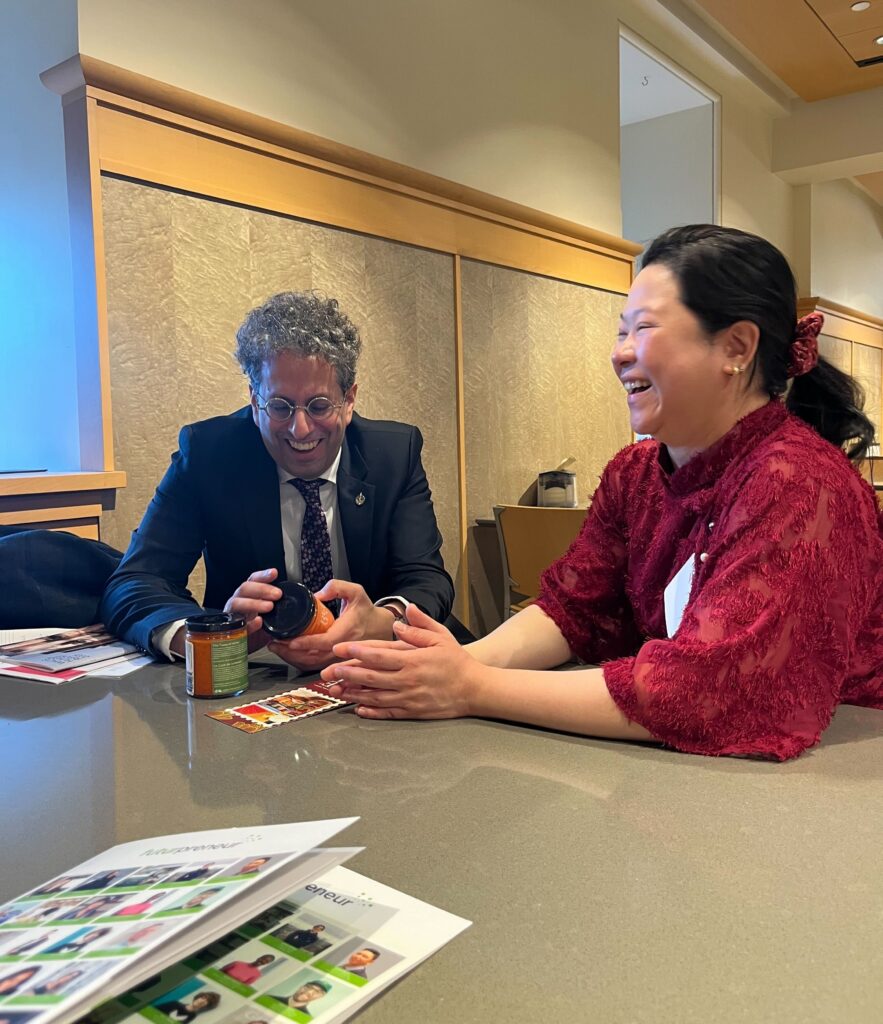
- Viet Anh (Vian) Nguyen (Rude Mama Hot Sauce, ON), whose handcrafted Vietnamese hot sauces using locally sourced Canadian ingredients have expanded into major grocery retailers across the country.
- Arold Ramboasalama & Cécile Dijoux (Or Noir de Madagascar, QC), who draw on four generations of family expertise to bring ethically sourced Madagascar vanilla to the Quebec market.
- Guillaume Blais (PROD.G, QC), a veteran of the contemporary circus world, who produces immersive acrobatic performances that prioritize inclusion and diversity.
Entrepreneur David Owasi delivered a keynote address about building Outreach Genius, highlighting how access to mentorship and capital can help founders scale both their businesses and their impact.
We also heard from Futurpreneur Indigenous entrepreneur and Board member, Lorne Jr. Blesse, founder of Kiwetin Clothing, AB, who shared his journey from northern Alberta, emphasizing the importance of empowering others to envision their own success and ensuring those same doors to opportunity remain open for them.
This sense of community was echoed by Guillaume Blais (PRODG, QC), who shared how the Hill Day experience allowed him to bridge the gap between culture and commerce, securing pivotal meetings with institutions like the Canada Council for the Arts.
Experience the energy firsthand. Click below to watch a special behind-the-scenes video from Joanna Pariseau (Taste the City, AB), who reflected on her Hill Day experience.
Bringing entrepreneurial voices to parliament
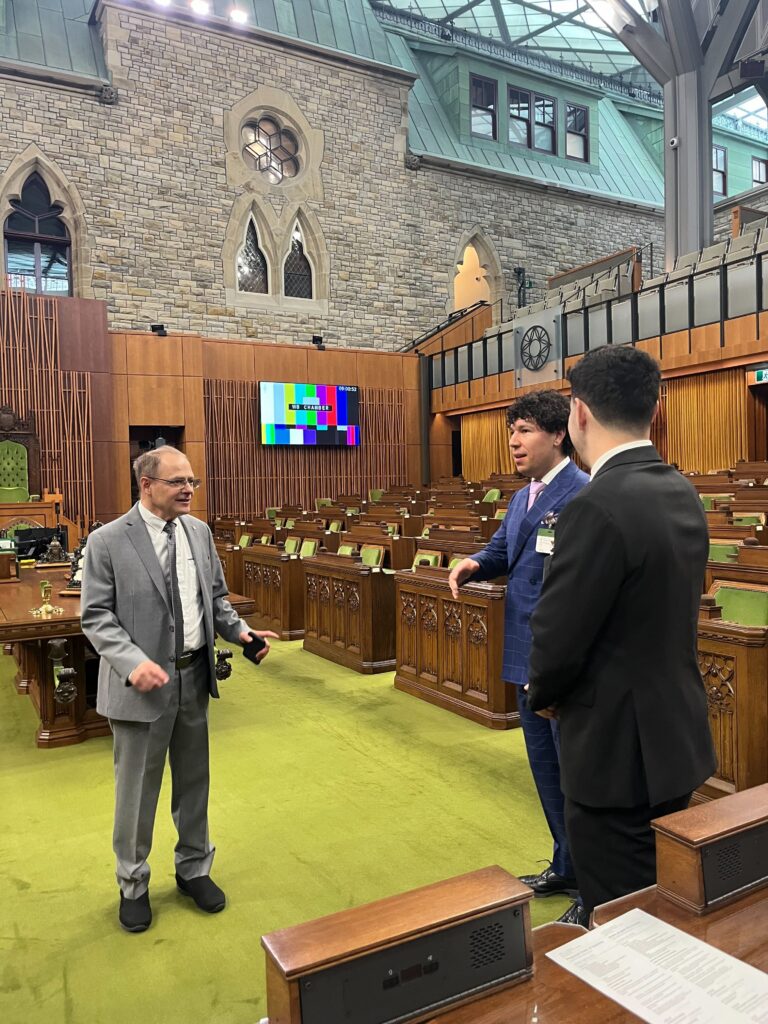
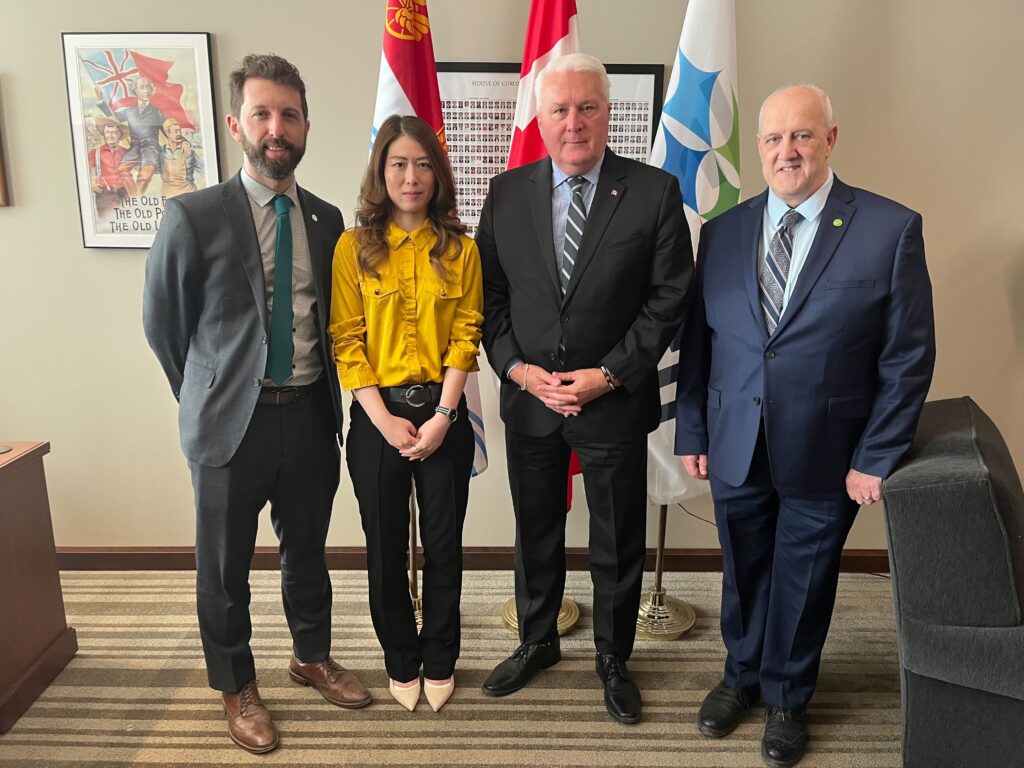
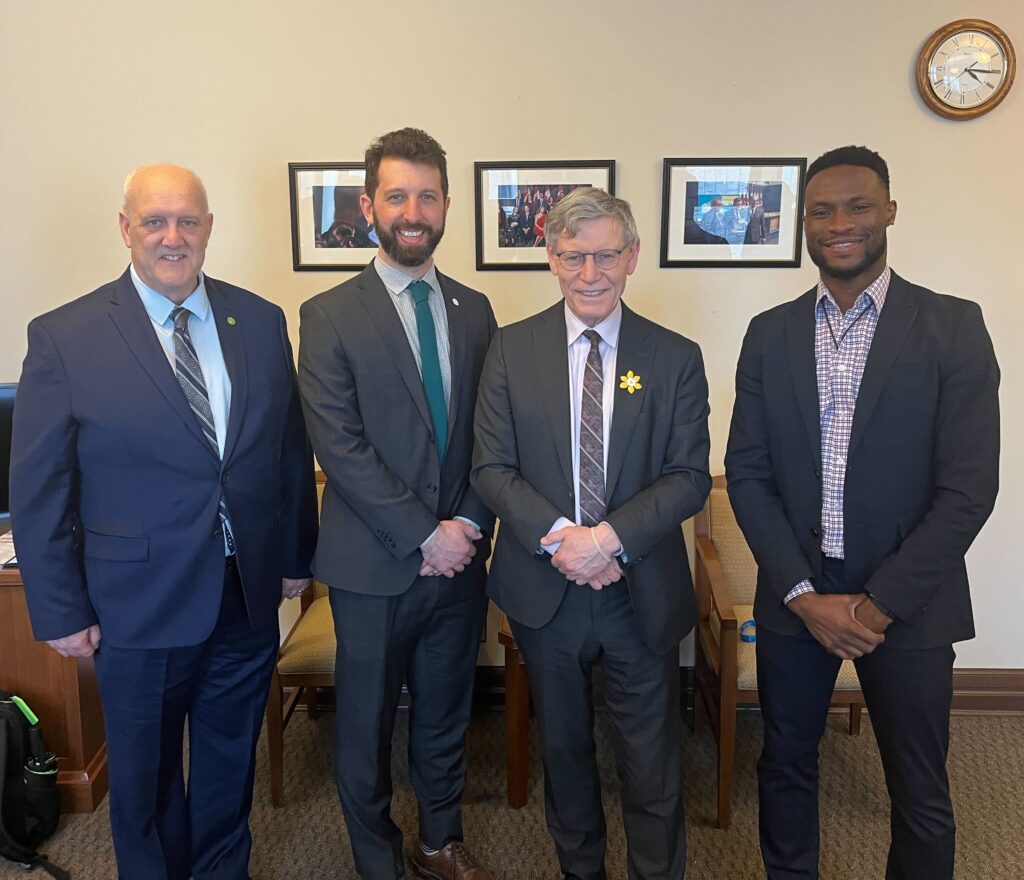
To ensure the voices of young entrepreneurs are heard where decisions are made, Futurpreneur arranged one-on-one meetings between our founders and their local Members of Parliament, so they could hear firsthand about the challenges of scaling a business in Canada and the impact of federal support.
Looking ahead
Since 1996, Futurpreneur has supported more than 21,000 young entrepreneurs, helping them launch more than 16,600 businesses across Canada. As we reflect on 30 years of success, we are reminded that while the landscape of business has changed, the spirit of the Canadian entrepreneur remains strong.
We leave Ottawa feeling optimistic. Our week underscored the importance of collaboration between entrepreneurs, government and the private sector to ensure the next generation of founders have the support, the mentorship and the capital they need to succeed.
Thank you to everyone who joined us on the Hill. Here’s to the next 30 years of building, growing and scaling together!
Investing in women: How Janine Jivani is helping to fuel a thriving Canadian economy
Women are building made-in-Canada businesses that power our economy. They’re majority owners of 20% of Canadian businesses, generating more than $90 billion annually, employing nearly one million Canadians and contributing about 9% of the country’s GDP. And Futurpreneur-supported businesses are a big part of the equation.
Investing in women-led businesses has long been a priority for Futurpreneur, as the results show. Today, over 40% of the businesses we support are women-led, more than double the national average.
One example is Janine Jivani, creator of Lilac & Leaf Wellness.
From healthcare regulation to holistic health
For five years, Janine worked in healthcare regulation. It was stable, respected work, but something was missing.
“For years I was working in healthcare and while I knew I wanted to help people, I often felt disconnected from my work. It didn’t really allow me to think creatively,” Janine says.
She began to see a gap between managing illness and promoting wellness. While her role focused on maintaining standards, she wanted to build something that aligned more closely with her own values and purpose.
A turning point
Janine’s shift toward entrepreneurship came with a growing sense of confidence in her own experience and perspective.
Her background in healthcare regulation gave her a strong understanding of ethics, safety and quality standards, areas she saw missing in much of the unregulated wellness market. Her identity as a woman of colour with Kenyan and Irish-Scottish heritage also shaped her vision for a more inclusive approach to wellness.
“My cultural background, which is mixed Kenyan and Irish/Scottish, truly makes me who I am. I believe my mixed heritage allows me to empathize with people from various backgrounds,” she says. “Representation and diversity are extremely important to me and are part of my business values.” Janine had the passion and the idea. What she needed next was guidance and support to launch the business. That’s where Futurpreneur came in.
Through Futurpreneur, she received financing and mentorship that helped turn Lilac & Leaf Wellness from a concept into a growing company rooted in trust and transparency.
Building community and empowering women
Today, Lilac & Leaf Wellness offers organic herbal teas and wellness products designed to support healthier lifestyles. For Janine, the business is also about creating community and making wellness accessible.
“Becoming an entrepreneur has been a transformative experience, continually teaching me what I’m truly capable of,” she says, noting that it’s pushed her to develop new skills, adapt to challenges and trust in herself. “If you’re ready to commit to your dreams, go for it. Futurpreneur isn’t just a place for financial support, they help you every step of the way and want you to succeed.”
Janine is now preparing for the next phase of the business. She’s rebranding Lilac & Leaf Wellness, including launching a new website, with resources and workshops geared specifically toward women empowerment. Her goal is to create a trusted space where women can access reliable information, products and support for their well-being.
Ready to launch your own vision?
Whether you’re a full-time founder or just thinking about starting your business, Futurpreneur is here to empower you through our dedicated Women in Entrepreneurship Initiative, as well as loan financing, mentorship and resources.
Join Futurpreneur’s Women in Entrepreneurship Initiative presented by TD and turn your ambition into action.
Your first investor is you: Building a foundation of trust and growth
Starting a business requires more than having a good idea and a promising market. Above all, it’s about building trust with lenders, investors, partners and even with your own family and friends. And one of the best ways you can build this trust as an entrepreneur is to personally invest in your own business, sending a strong signal that you believe in it.
Building trust through personal investment
Financial leverage and access to capital
Putting your own money into your business ends a clear message to every potential investor you meet: “I believe in this project enough to invest my own resources.” From a financial perspective, your personal investment can strengthen the company’s capital structure reduce the perceived risk for lenders; and make it easier to access additional funding such as loans, partners and investors. In simple terms, your own money often acts as leverage to unlock other sources of financing.
Credibility and building trust with lenders
For lenders or investors, a founder who hasn’t invested anything personally raises a fair question: “Why should I take a risk if you aren’t willing to do so yourself?” Personal investment boosts the credibility of your business, the confidence in your team’s ability to navigate challenging periods and the perception of professionalism and seriousness. Increasingly, demonstrating financial readiness, including credit awareness and sound financial habits, has become an important part of building credibility with lenders and investors.
Personal commitment and long-term motivation
From my experience, even a modest personal investment tends to increase founders’ commitment. After all, when you have some money at stake, you’re more likely to go the extra mile, look for creative solutions and keep going when others might stop. This pressure can be a key motivator, especially during difficult moments which are a natural part of any entrepreneurial journey.
How can you build your personal investment?
The first step is to gain a realistic understanding of your own cash flow, debt, credit and savings habits. To do so, I recommend KOFE (Knowledge of Financial Education), a useful tool co-developed by Futurpreneur and Consolidated Credit. KOFE can help entrepreneurs build financial literacy, strengthen credit and gain the confidence needed to invest in their own business at any stage (whether it’s pre- or post-launch).
Instead of waiting for that exclusive “right moment” to invest, here are some actions to consider today
- Financial discipline: Track all expenses and create a budget where saving for your business is a priority.
- Dedicated savings: Open a separate bank account to build your investment and set up automatic, regular transfers into it. Even small monthly amounts help.
- Leverage your skills: Reduce external funding needs by thinking of ways to generate additional income.
- Improve your financial health: Reduce high-interest debt and maintain a strong credit profile.
- Smart savings tools: Use savings tools such as a TFSA, high-interest savings accounts or workplace savings programs.
- Thoughtful commitment: Plan your investment carefully and make sure your savings and contribution plan is realistic, motivating, and aligned with your personal goals.
Expanding personal investment with external financing
Personal investment is the first step, but to grow your business usually requires external financing as well because as the saying goes: “Alone, you go faster. Together, you go further.”
There are several external financing options to consider. To choose the right one for your business, first you need to understand how each one functions and that’s where a tool like KOFE comes in. It can help you make more informed financial decisions as your business grows, shedding light on the major external financing options available:
- Loans are well suited for clear, predictable needs, provided you carefully manage your cash flow, repayment capacity and overall financial viability.
- Grants can support innovation and reduce risk, but relying solely on them can weaken long-term sustainability.
- Equity financing (partners or investors) can accelerate growth, but it involves sharing ownership and decision-making.
- Private equity and venture capital may be relevant in certain sectors but typically come with high growth expectations and strong return requirements.
Finding the right balance
There is no one-size-fits-all formula in entrepreneurship. The key lies in balancing personal commitment with the right financial tools. Remember, personal investment is the first step toward building trust, credibility and long-term success. After all, if you’re not ready to invest your own money in your project, how can you expect others to do the same? So, if you’re thinking about starting a business, get ready to become the first investor in your own project.
Serge-Richard Petit-Frère has built his career around entrepreneurship, business mentoring, and project development. He holds a specialization in SME management and a master’s degree in Entrepreneurship and Project Development. He has supported organizations through strategic projects, market analyses, and executive training in financial and commercial institutions. His perspective combines senior leadership experience in finance with his own entrepreneurial journey. An engaged educator, he has taught entrepreneurship in academic and professional settings and holds the IFC-LPI LPI Trainer Performance Monitoring (TPMA) certification. Since 2023, he has served as Director of Entrepreneurship Programs at Futurpreneur, supporting entrepreneurs in building sustainable businesses.
There are so many resources available to help you gain financial confidence. If you are ready to take your finances to the next level, explore free tools and templates from Futurpreneur’s Business Resource Centre.
You can also explore free resources available to you through Futurpreneur’s KOFE Initiative, a confidential virtual platform designed to strengthen financial confidence and long-term success of young entrepreneurs across Canada. And if you are looking for financing with mentorship to start or buy a business in Canada, click here to learn more.
The growth catalyst: How Futurpreneur and the G20 YEA connect Canadian founders with global opportunity
For many young entrepreneurs, “going global” often feels like a distant dream, something only large companies with massive budgets can attain. The G20 Young Entrepreneurs’ Alliance (YEA) is designed to bring that dream within reach.
Hosted by a G20 country each year, the G20 YEA summit brings together hundreds of the world’s top young entrepreneurs to share ideas, advise on key issues, make international connections and, most importantly, explore global growth strategies. This is why Futurpreneur proudly leads Canada’s G20 YEA delegation to these annual summits, ensuring Canadian founders are actively shaping global conversations.
As the 2025 summit in Johannesburg, South Africa demonstrated, the experience is truly once-in-a-lifetime: in a post-summit survey, 23 respondents (out of 39 young Canadian delegates) said it marked a defining turning point in their efforts to scale their businesses.
Read on to learn how the G20 YEA helped past participants overcome common barriers to international growth.
Charting a path to global expansion
Before joining the delegation, participants identified some of the common hurdles they face when trying to enter a foreign market like South Africa, including a lack of local experience and credibility as a founder, along with trusted introductions.
The G20 YEA 2025 post-summit survey also revealed three additional barriers, each of which Futurpreneur directly addressed through the summit experience:
Barrier 1: Limited access to global networks
Sixty-five per cent of survey respondents from the participating delegates who responded to the survey cited limited access to credible international business networks as their primary challenge to scaling globally. To help overcome this hurdle, Futurpreneur led targeted trade activities and facilitated curated B2B (business-to-business) connections, opening doors to senior government officials and industry leaders who are typically out of reach for young founders.
Result: All survey respondents reported an expansion of their international networks, with a total of more than 740 new global connections made.
Barrier 2: Financial constraints
Over half (57%) of the survey respondents identified the cost of international travel as a significant barrier to gaining international exposure. In fact, without Futurpreneur’s partial travel stipend, made possible thanks to the support of Global Affairs Canada’s Exports Associations Trade Program, several delegates shared that participation would not have been possible.
Result: This financial support enabled delegates to participate in 123 B2B meetings, 80 of which progressed to tangible next steps, including partnership discussions and project exploration.
Barrier 3: Gaps in market intelligence and export readiness
Prior to the summit, 52% of the survey respondents reported difficulty accessing market-specific intelligence, regulatory guidance and information on export tools and government support programs. To address this gap, Futurpreneur delivered intensive pre-departure briefings and workshops that strengthened export literacy and enhanced readiness for global expansion.
Result: Following the mission, 87% of survey respondents reported increased awareness of Government of Canada resources, including the Trade Commissioner Service (TCS), while 73% reported feeling ready to actively pursue international opportunities with confidence.
Through these targeted interventions, Futurpreneur transformed global ambition into actionable strategies, providing founders with the networks and knowledge needed to actively compete and thrive in foreign markets.
Voices from the delegation: Real-world impact in action
While the data highlights the scale of the mission, the delegates’ experiences reveal its deeper impact. Their stories showcase the partnerships formed, the credibility gained and the market validation achieved – outcomes that numbers can’t fully capture.
- “This year’s G20 event was remarkable. Education was a priority for several delegations, and I’ve had promising initial meetings with delegates from Mexico and India about creating new certified programs that upskill youth before they immigrate for work or school. It’s been fantastic to see how we might expand our services and grow our businesses.” — Clinton Large, founder, Large Inc.
- “[The G20 YEA] offered Iris + Arlo the opportunity to connect with visionary leaders from around the world, share our mission to make sustainable period care more accessible, and form meaningful partnerships that will help us expand into international markets.” — Lara Emond, founder, Iris + Arlo
- “Attending the G20 Young Entrepreneurs Alliance Summit in Johannesburg as part of the Canadian delegation was a truly transformative experience for me and for Kovida Consultants. Thanks to this opportunity, I was able to expand my international network significantly, build relationships with entrepreneurs and ecosystem partners from across the G20, and secure new client relationships as a direct result of conversations that began at the Summit.” — Kajal Agarwal, founder, Kovida Consultants
Apply today to join our 2026 mission to Vienna
Whether you’re exploring international trade for the first time or preparing to scale into new markets, the 2026 summit in Vienna, Austria could be just the ticket. As a strategic gateway to the European Union, this mission offers unparalleled access to one of the world’s largest single markets – home to more than 450 million consumers.
Taking place the week of September 14, 2026, this year’s summit will enable you to expand your network of international connections in key markets, advance youth entrepreneurship on the international stage while learning about growth strategies and positioning your business for global expansion.
With 100 % satisfaction rate in trade activities and a strong majority of delegates eager to stay engaged as alumni, it’s clear the value extends far beyond the summit.
So, what are you waiting for?
Futurpreneur provides the network, preparation and support to ensure you do not have to do it alone. Check to see if you’re eligible to join the Canadian delegation to the 2026 G20 YEA Summit in Vienna, led by Futurpreneur, and introduce your business to the world.
Stay tuned. Applications will open soon
Beyond the prompt: How to use AI to build a solid business plan
As an entrepreneur, your greatest asset isn’t just your idea, but rather the clarity behind it. While many entrepreneurs see AI as the perfect shortcut to building a business plan, the most successful founders turn to it for support instead of relying on it for direction. It’s a partner, not a co-founder.
To design a solid plan that reflects how your business will actually operate, you need to lead the conversation. Here’s how to move beyond generic prompts and turn AI into a strategic lever for your business.
The problem with AI-written business plans
I’m starting to see more business plans that are clearly written by AI. They’re easy to spot because they read like a generic MBA template. Lots of business language. Very little substance. Ironically, these plans signal the opposite of competence. Instead of reflecting confidence, they quietly say, “I don’t really know how this business will work.”
AI can do many things, but it can’t fix a weak idea or rescue a business plan that is still too early. It only amplifies what is already there. So, if your thinking is fuzzy, the AI output will be fuzzy. If your strategy is shallow, the plan will sound polished but will be empty.
Where people misuse AI
Here are the most common mistakes I see when aspiring entrepreneurs use AI to write a business plan:
- They invent a value proposition with no proof they can deliver it.
- They list a dozen marketing tactics with no priorities or specifics.
- They write vague, corporate-sounding statements like “we are committed to customer excellence.”
- They outline a huge range of products or services without any operational detail to support them.
None of this builds credibility. It just fills space.
AI is a partner, not a ghostwriter
AI works best as a partner, not a replacement for your thinking. Like any good partner, it needs direction, constraints and real-world facts. You still have to do the hard work of clarifying your idea, your customer and how you will actually execute. AI can help you think better; it can’t think for you.
Ask better questions, get better answers
The quality of your prompts determines the quality of the output. When working with an LLM (Large Language Model) like ChatGPT, ask specific, grounded questions tied to your real situation. And for the best output, focus on only one problem at a time.
For example, if you are launching a dog harness brand in Halifax, don’t ask a broad, generic question like, “Who are my online competitors?” Instead ask specific questions like these: Who are three small- to mid-sized competitors that launched one to three years ago? What channels did they use first? What price points worked? What mistakes did they make? What retailers in the Halifax area carry high quality dog harnesses?
You will learn far more from businesses slightly ahead of you than from giants like Amazon or Walmart, who compete mostly on price. Your advantage is likely quality, service and local presence. Tell AI that. Give it context, so you can extract lessons and shape a concrete strategy.
Narrow the focus
In a recent workshop on using AI for marketing plans, one participant told me she felt overwhelmed. AI gave her too many ideas, and she did not know where to start. That’s common. AI is great at generating options; it’s terrible at choosing for you. To fix this issue, narrow the scope.
Instead of asking for “a marketing plan,” ask something like this: “Based on these numbers and constraints, what are the top three activities that will drive sales in the next six months, ranked in order of priority?”
Now you are forcing AI to think with you, not for you.
Use AI to pressure test your assumptions
In one example, a small food business planned to produce 5,000 units with a seven-month shelf life. AI suggested several marketing tactics, but more importantly, it flagged the real risk: too much inventory too quickly. That insight mattered more than any list of promotions. From there, you can ask better follow-up questions such as: “If we target 10 stores by month six, what should month one and month two actually look like? How many samples? How many retailer visits? What sales can we realistically expect?”
This is how AI becomes useful. Not by writing the plan, but by stress testing your assumptions and helping you think through the details. All this will help build out a realistic Sales Forecast Assumption (a crucial and mostly overlooked section of the business plan).
Making the strategy truly yours
A strong business plan is built on clarity, constraints and evidence. AI can support that work, but it can’t replace it. If you find yourself pasting a prompt into AI and copying the answer straight into your plan, you’re probably doing it wrong. Use AI to sharpen your questions, challenge your logic and test your strategy. Treat it like a smart assistant, not an author.
Because eventually you will have to talk about this plan with a real person. A lender. Someone from Futurpreneur (if you are submitting a plan to us). Maybe me. They will ask questions: Why this market? Why this price? Why this channel? How will you actually execute?
If the words in your business plan are AI’s and not yours, you will feel it immediately. You’ll struggle to explain. You’ll backpedal. And your credibility will disappear fast.
There’s no shame in saying, “I don’t know yet.” There’s real risk in pretending you do know. Use AI to think more clearly, not to sound more impressive. Your goal is not to produce a polished document. It is to be able to stand behind every line of it.
Dominik Loncar is an entrepreneurship coach at Futurpreneur. Over the last decade, he has dedicated his practical skills and expertise from building three businesses and running his own social purpose business to guide young entrepreneurs. Dominik believes that becoming an entrepreneur is a transformative identity shift and has worked with over 200 young entrepreneurs to launch social purpose ventures and both traditional and innovation-based businesses in a multitude of industries.
Ready to launch your business with confidence? Futurpreneur offers flexible loan financing, expert mentorship, and resources to empower you to reach your entrepreneurial goals. Get started today by exploring our resources, including the Business Plan Writer and register for a Rock My Business workshop, such as the Rock My Business Plan session, to refine your strategy.
Empowering in any language: Inspiring lessons from the first-ever Futurpreneur Francophone Growth Accelerator in Montreal
During Small Business Month last year, the vibrant city of Montreal hosted the very first Francophone edition of Futurpreneur’s Growth Accelerator. It was an inspiring and energizing event!
The two-day gathering brought together 15 Francophone entrepreneurs, ready to transform their aspirations into lasting success. It concluded with a pitch competition held at the National Bank of Canada (NBC) offices, where the inspiring duo Arold Ramboasalama and Cécile Dijoux, Co-Founders of OR NOIR du Madagascar, impressed the jury and took home the $10,000 grand prize!
Beyond the presentations and handshakes, it was a true whirlwind of intensive learning that left a lasting impression. Participants left with concrete tools, sharp strategies, renewed confidence and a strengthened network.
Wondering about the benefits of this unique program? Join us to discover the key lessons.
The program: a commitment to Francophone entrepreneurship
With financial support from its partners, Futurpreneur has developed this growth program in partnership with NBC, with a specific focus on the needs of Francophone, Acadian, and Quebec-based entrepreneurs. This program is offered exclusively in French to ensure that each participant fully understands the concepts and is supported in their preferred language.
Additionally, we have actively mobilized our Francophone partners, such as Réseau de Développement Économique et d’Employabilité (RDÉE Canada), the Société de Développement Économique de la Colombie-Britannique (SDECB), RDÉE Nouveau-Brunswick, the Société Économique de l’Ontario (SÉO), and the Fédération des Gens d’Affaires Francophones de l’Ontario (FGA). These organizations were crucial in identifying these talented participants and making this program possible.
The Francophone Growth Accelerator program began earlier this year with tailored supports to recognize the unique needs of Francophone entrepreneurs, positioning them to seize the best opportunities in French-speaking markets and beyond. To achieve this, the founders completed an intensive learning curriculum focused on network development and business growth. This included six virtual workshops led by recognized experts in the fields of marketing, operations, finance, as well as personal and professional development. The journey culminated in the two-day event in Montreal, which included a pitch competition, where the winners were awarded the grand prize of $10,000!
The pitch competition
On the first day of the Growth Accelerator, the entrepreneurs focused on the challenges facing French-speaking businesses and the importance of communicating with impact and authenticity. They also refined their pitches in an effort to prepare for the competition and even presented their businesses and prototypes to Futurpreneur’s partners. The next day, they delivered their pitches to a panel of Futurpreneur and partner judges.
Expert insight: a motivational message to boot growth
On the second day, before presenting their businesses to the pitch panel, participants had the opportunity to hear advice from Étienne Crevier, Founder of Entourage Investment Inc. and Futurpreneur’s board member. Crevier emphasized the importance of being able to explain one’s vision clearly, reflecting on his own beginnings. He also discussed the challenges that hold entrepreneurs back..
“When faced with doubt, you have to silence the imposter syndrome and share the risk by surrounding yourself with the right team,” Crevier said. When one of the entrepreneurs asked him how to manage the pressure that comes with taking loans, he was clear: “Banks and organizations like Futurpreneur do not have the mission of bankrupting people, and taking out a loan proves above all that you are determined.”
Lessons for the future: A fresh look at long-term Francophone growth
A few moments before the announcement of the winners, we collected impressions from the participants to highlight what they retained from this program.
Interprovincial trade as the new frontier of commercial success
Interprovincial trade emerged as the key element on which all participants agreed. “The most valuable advice I received throughout the program came from Mona-Lisa Prosper, Senior Director, Community Engagement at Futurpreneur. “She advised us not to limit our way of thinking; not to hesitate to look deeper as well, and that we should not only focus on the English-speaking side to do business. Going to other provinces is possible, as long as you connect with local people or organizations to learn how that province works and consider it as a new country or a new market,” says Ingrid Broussillion, Founder of The WoW Culture in Vancouver, BC, and participant in the Francophone Growth Accelerator program.
Strategic communication and the key to persuading investors
Several participants also praised the value of working on their pitch presentation and learning how to persuade investors. “Thanks to the Growth Accelerator, I developed a pitch presentation; I didn’t have one before. Now, I can identify the key elements of my business that are worth highlighting; I better understand the points that can persuade investors and what builds their trust. I also better understand how to anticipate the long-term effects of support from investors,” said Louis-Philippe Allard-Bergeron, Founder of Centre Hub Créatif in Rivière-Éternité, QC, and one of the four pitch competition finalists.
Assertiveness and networking to boost francophone entrepreneurship
Ben Liegey, Founder of Meilleure Table from Vancouver, BC, and also one of the four pitch competition finalists, added that the Francophone Growth Accelerator helped him clarify and refine the long-term vision for his business. “This event allowed me to understand that I need to be more rigorous in terms of financial analysis and cash flow on a monthly basis. I’m also very grateful for networking with entrepreneurs across the entire country. That’s what initially attracted me to the program, as it’s very important for entrepreneurs to foster relationships. I realized that we share different challenges and different goals. But ultimately, we share much more in common than we think. It was very enriching.”
This first Francophone edition of the Growth Accelerator confirms the immense potential and power of Francophone entrepreneurs. It’s clear, the moment has arrived to embrace bold actions, build interprovincial connections and courageously drive success for these founders into the future.
Ready to accelerate the growth of your small business? Do you want to be part of the next wave of Francophone entrepreneurial success? Learn more about the Futurpreneur Francophone Growth Accelerator program and explore how to start, buy or grow your own business through our loan with mentorship and resources! Click here to learn more.
The taste of sweet success: Celebrating Adeola Adeosun, winner of the $10,000 DIY Marketing Challenge
For Adeola Adeosun, entrepreneurship has always been about more than baking. It’s about creating moments of joy, building confidence and opening doors for families through creative baking.
Based in Edmonton, Alberta, Adeola is the founder of HouseOfZeeva, a fast-growing cake and dessert company known for delivering sweetness during life’s most meaningful celebrations. Beyond custom cakes and desserts, HouseOfZeeva also runs an online baking academy that teaches children and adults practical baking skills while nurturing creativity, independence and self-confidence.
That purpose-led approach is what ultimately helped Adeola stand out as the winner of Futurpreneur’s DIY Marketing Challenge, earning her the coveted $10,000 in cash, sponsored by Empower by GoDaddy.
A month of learning, testing and growth
The DIY Marketing program, sponsored by Empower by GoDaddy, was a month-long learning experience designed to help young entrepreneurs strengthen their digital marketing skills. Delivered in four cohorts throughout the year (April, June and two in September), the program supported 70 entrepreneurs in 2025 with practical tools, expert guidance and a marketing grant to put the startup founders’ ideas into action.
At the end of 2025, graduates from all cohorts were invited to compete in the DIY Marketing Challenge to showcase the marketing strategies they developed through the program. Adeola was among them and her strategy rose to the top.
For Adeola, the focus was on clearly communicating the value of her online children’s baking course in a crowded digital space.
“We wanted parents to immediately understand the educational benefits,” she explains, “not just the baking outcomes.”
Developing strategy with intention
Through the program and challenge, Adeola took time to reflect not just on tactics, but on direction.
“Participating in the DIY Marketing Challenge helped me with introspection and critical evaluation of what I was doing from a marketing standpoint, and what the next six months could look like for the business with the right tools and resources,” she says.
By using customer journey mapping, Adeola aligned her content with key considerations like awareness, trust and enrollment stages, making her marketing more intentional and results-driven.
Standing out by building from within
What set Adeola’s strategy apart was not just her vision but execution. From running social media ads and lead-capture automation to nurturing customers and using AI tools to develop marketing creatives, HouseOfZeeva had already invested in building in-house digital infrastructure to support its growth. During the program, Adeola also used GoDaddy’s tools to build and refine her website, helping her create a clearer online home for her baking academy.
“We were already actively exploring ways to reach more families through the online baking program,” Adeola says. “Being able to clearly articulate what we already do in-house and where we want the business to be, mid-term, really helped our strategy stand out.”
That clarity and preparedness resonated strongly with the judges.
A milestone moment
“Winning the DIY Marketing Challenge is a significant boost to the business,” Adeola says. “We are now empowered to reach and help more families through the online baking program.”
Beyond the financial support, the win also felt like validation. “It’s proof that what we are doing has strong marketing potential and appeal,” she reflects. “As an entrepreneur, this is an important milestone, a real turning point for our growth and reach.”
Advice for fellow entrepreneurs
For entrepreneurs who struggle with marketing or feel unsure how to tell their story, Adeola emphasizes authenticity and clarity.
“First and foremost, people buy from people. Find ways to introduce your personality into your outreach, it goes a long way in building trust,” she says.
She also encourages entrepreneurs to focus on transformation. “Clearly communicate what your product changes for your customer. Avoid overcomplicating your message and speak directly to your ideal customer’s needs.”
Celebrating a well-earned win
Adeola’s journey shows what can happen when entrepreneurs take the time to clearly tell their story and are supported along the way.
Futurpreneur and Go Daddy congratulate Adeola on winning the $10,000 DIY Marketing Challenge grant. We’re proud to celebrate her success and excited to see what’s next for her and her business!
Are you a young Black entrepreneur ready to launch, buy or grow your business? Futurpreneur’s Black Entrepreneur Startup Program (BESP) offers loan financing, mentorship and culturally relevant resources to empower your success. Learn more.